by Jordan Stocker | Apr 15, 2026 | Housing News
The House Ways and Means Committee released its FY2027 budget, H.5500, today. The $63.3 billion budget includes meaningful increases for several key housing programs. Below is a summary of where H.5500 lands on CHAPA’s priority items.
A side-by-side overview of CHAPA’s funding asks alongside FY26 GAA, Governor’s Budget (H.2), and H.5500 figures is available in CHAPA’s updated FY2027 Budget Tracker.
Rental Assistance
MRVP (7004-9024)
- H.5500 funds MRVP at $281,341,728, $28 million above FY26. This funding would support existing vouchers.
- CHAPA is requesting: $300 million, which would create approximately 1,000 new vouchers.
- What changed in policy language:H.5500 makes several policy updates:
- Restores the “not less than 75%” voucher targeting floor for households at or below 30% AMI. This keeps the program focused on households with the lowest incomes, instead of making that target optional.
- Adds mobile voucher award authority for households in project-based units whose contracts are not renewed, allowing them to keep their assistance and move rather than lose help when a contract ends.
- Lists the payment standard at 110% of fair market rent. This makes the higher payment standard clear and consistent.
- Adds a $50 per voucher per month administering agency fee floor.
- Protects continuing households from HUD fair market rent reductions. This helps shield current voucher holders if federal rent benchmarks fall later.
- Prohibits reducing subsidies for inspection costs. This helps ensure tenants do not lose rental support because of required inspections.
- Anchors new mobile voucher rent limits at 110% FMR effective July 1, 2026, with anniversary-date protection for existing leases. This sets a clear rule for new vouchers while protecting current tenants from mid-lease changes.
RAFT (7004-9316)
- H.5500 funds RAFT at $210,000,000, $2.5 million above FY26.
- CHAPA is requesting: $300 million.
- H.5500 also includes a set-aside of not less than $3 million for elders, persons with disabilities, and unaccompanied youth.
HomeBASE (7004-0108)
- H.5500 funds HomeBASE at $82,322,001, a $25 million increase over FY26.
- CHAPA is requesting: $80 million.
- H.5500 adds quarterly reporting requirements and explicitly includes hotel and motel placements in its performance targets, directing the executive office to move families out of hotels, motels, and shelters into sustainable housing.
- Two additional differences worth noting:
- H.5500 reintroduces a 12-month time limit on the income-increase ineligibility grace period. This could limit the eligibility window for families whose income has increased
- H.5500 converts the extraordinary housing crisis exception pool to a spending cap of $2.5 million.
DMH Rental Subsidy (7004-9033)
- H.5500 funds the DMH subsidy program at $20,000,000, $3.45 million above FY26. This expands support for people with mental health needs who need stable housing.
AHVP (7004-9030)
- H.5500 funds AHVP at $19,263,183, roughly $200,000 below FY26. This funding would support existing vouchers.
- CHAPA is requesting: $30 million.
- H.5500 adds a lease anniversary protection, meaning that if rent limits change, existing voucher holders are protected from any increase until their lease anniversary date. It also adds a damage termination provision and a three-element reporting requirement.
- H.5500 removes the executive office’s flexibility to set a payment standard or utility allowance that could allow households to pay less than 25% of net income. The 25% floor is now unconditional. Given that AHVP serves people with disabilities on fixed incomes like SSI, this is a change worth watching.
Re-Entry Voucher Program (7004-9034)
- H.5500 funds the Re-Entry Voucher Program at $3,000,000, $120,000 below FY26.
- H.5500 adds a six-element program design reporting requirement due October 2, 2026.
Public Housing
Public Housing Operating (7004-9005)
- H.5500 funds Public Housing Operating at $117,840,000, a $2.2 million increase over FY26.
- CHAPA is requesting: $132.9 million.
- H.5500 adds a first-preference requirement for vacant elderly public housing units, giving priority to MRVP voucher holders aged 60 and older.
Public Housing Reform (7004-9007)
- H.5500 funds Public Housing Reform at $1,243,831, roughly flat with FY26’s $1,250,000.
- CHAPA is requesting: $1.6 million.
Homelessness and Supportive Housing
Home and Healthy for Good (7004-0104)
- H.5500 funds this program at $8,890,000, matching both FY26 and CHAPA’s request.
Unaccompanied Homeless Youth (4000-0007)
- H.5500 funds this item at $10,439,590, roughly $206,000 below FY26.
- CHAPA is requesting: $15 million.
Sponsor-Based Permanent Supportive Housing (7004-0105)
- H.5500 funds this item at $10,072,875, matching FY26 and what CHAPA is requesting.
- H.5500 adds a $2.1 million minimum set-aside to sustain low-threshold sponsor-based leasing previously linked to Social Innovation Financing pay-for-success projects.
New Lease for Homeless Families (7004-0106)
- H.5500 funds this item at $250,000, matching FY26 and what CHAPA is requesting. This maintains funding for the homeless family preference program in private multi-family housing operated by New Lease for Homeless Families, Inc.
Housing Stability and Homeownership
Housing Consumer Education Centers (7004-3036)
- H.5500 funds this item at $5,200,000, $650,000 below FY26.
- CHAPA is requesting: $8,974,000.
- H.5500 adds an annual reporting requirement and a $200,000 set-aside for the Regional Housing Network of Massachusetts for coordination and information technology.
First-Time Homebuyer and Foreclosure Counseling (7006-0011)
- H.5500 funds this item at $3,000,000, doubling the FY26 level of $1,500,000.
- CHAPA is requesting: $3,050,000.
- H.5500 also makes the grant commitment mandatory, requiring the Division of Banks commissioner to expend $1,500,000 in grants rather than leaving the amount to the commissioner’s discretion. This makes the funding more dependable.
Access to Counsel (0321-1800)
- H.5500 funds this program at $3,000,000, $500,000 above FY26.
- CHAPA is requesting: $4,000,000.
MassAccess Registry (4120-4001)
- H.5500 funds this item at $150,000, matching FY26 and what CHAPA is requesting.
- This maintains support for a resource that helps connect people with accessible housing.
STASH (7004-0107)
- H.5500 includes $100,000 for local housing program administration under this line but does not include any directed funding for STASH, which provides a matched-savings program, financial literacy, and homebuyer education to help first-generation homebuyers.
- CHAPA is requesting: $1,000,000.
Administrative Capacity
EOHLC Admin (7004-0099)
- H.5500 funds EOHLC administration at $21,785,301, a $5.8 million increase over FY26.
- CHAPA is requesting: $22 million.
- H.5500 adds a mandate to maintain in-person intake offices in 10 cities and towns and a September 16, 2026 deadline for EOHLC to promulgate regulations protecting housing preference status for households receiving temporary assistance including HomeBASE.
What’s Next
While the House Ways and Means Budget maintains important housing investments, more must be done to meet the scale of housing need, especially as costs continue to rise and far too many Massachusetts residents struggle to find a home they can afford.
Over the coming weeks, the House will take up amendments to H.5500. CHAPA will be working with members and partners to advocate for the funding needed to address housing challenges across the Commonwealth. For a more detailed discussion of H.5500 and to plug into shared advocacy strategy, please join the Building Blocks Coalition. The next Building Blocks Coalition meeting will be 4/22/2026 and you can register for the meeting here.
by Jacob Love | Apr 1, 2026 | Featured News, Housing News
Recently, the U.S. Department of Housing and Urban Development (“HUD”) has issued a series of proposed rules that would be harmful to families in federal rental assistance programs. CHAPA has created a Resource Guide designed to help members of the public weigh in on these and future HUD proposals.
HUD is currently in the process of adopting three proposed rules, which are not yet final. The agency is accepting public comments on all three rules and each rule has its own comment deadline in either late April or early May. The proposals would have a huge impact on HUD programs, including by:
- Stopping federal rental assistance from going to families with mixed immigration status;
- Allowing housing authorities and some landlords to impose work requirement rules and time limits on participants in major rental assistance programs; and
- Ending a pre-eviction notice requirement for tenants in certain HUD programs.
If HUD formally adopts these proposals, it will force thousands of families out of rental assistance programs and into housing instability. One thing that people can do to push back on these rules is submit public comments. Not only can anyone submit a public comment, but they can also do so anonymously.
HUD is required to review timely submitted public comments and respond to significant issues raised therein. As a result, even brief, informal comments can make a big difference. For a comment to be impactful, the only thing the commenter needs to do is share their unique perspective.
The aim of CHAPA’s Resource Guide is to help the public: (1) understand the comment process; and (2) write and submit an effective comment. The Guide also includes important information for each pending HUD proposal, like the relevant comment deadline and a link to submit comments.
If you or someone you know is interested in submitting a public comment to HUD, you can access the Resource Guide here: https://bit.ly/CHAPA-HUD-Response.
by Jacob Love | Feb 18, 2026 | Housing News
On Friday February 13th, in partnership with Klein Hornig LLP, CHAPA submitted a comment letter opposing a proposal from the Department of Housing and Urban Development (“HUD”) to rescind the agency’s regulations related to disparate impact liability under the federal Fair Housing Act (“FHA”).
Disparate impact discrimination is a legally actionable form of housing discrimination under the FHA that occurs when a seemingly neutral policy harms one group of people more than others across a legally protected characteristic like race or sex. HUD’s disparate impact regulations outline a framework for determining when such housing discrimination has taken place.
Not only do these regulations help steer HUD’s enforcement of FHA protections against disparate impact discrimination, but they also provide guidance to housing providers on how to conform their practices and behavior to the law. Any withdrawal of the regulations will exacerbate housing discrimination by reducing both accountability and legal guidance under the FHA.
CHAPA’s comment letter highlights all of this for HUD. It also points out that: (1) HUD’s justification for the proposal hinges on a mischaracterization of Supreme Court precedent; and (2) any withdrawal of the regulations will violate HUD’s legal obligations to enforce the FHA and affirmatively further fair housing.
The letter ends by urging HUD to retain the regulations. The comment period concluded on February 13th and HUD must now review submitted comments before deciding whether to formally adopt the proposal.
by Jenna Connolly | Feb 12, 2026 | Housing News
Today, a host of organizations joined forces as signatories on an amicus brief defending the MBTA Communities Act. Attorneys from Citizens’ Housing and Planning Association (CHAPA), Lawyers for Civil Rights (LCR), and Nixon Peabody LLP submitted the brief to the Massachusetts Supreme Judicial Court, opposing the Town of Marshfield’s claim that the MBTA Communities Act is an unfunded mandate. CHAPA, LCR, and Nixon Peabody’s amicus brief reaffirms what the Court has already decided and what Massachusetts Attorney General Andrea Campbell has already made clear: noncompliance is not an option.
“CHAPA will continue to support using all the tools Massachusetts has—including the MBTA Communities Act—so everyone can find a safe, affordable home in the community they choose,” said Rachel Heller, chief executive officer of CHAPA. “Complying with this critical legislation puts the Commonwealth on the path to a bright future where everyone can thrive. The majority of MBTA Communities have already done so, with 166 out of 177 communities already in compliance.”
The Massachusetts Superior Court already rejected Marshfield’s argument as a flawed and legally non-binding determination from the State Auditor’s Division of Local Mandates (DLM) in June 2025. In that decision, the Court concluded that updating zoning codes and holding town meetings are regular functions of municipal government, meaning that the law’s requirement to adopt multifamily zoning districts does not create additional costs. Furthermore, Attorney General Campbell sued nine municipalities that were noncompliant as of January 2026.
“Massachusetts Courts have repeatedly confirmed that the MBTA Communities Act is the law of the land, and we expect the same outcome this time,” said CHAPA’s general counsel for policy, Jacob Love. “No community is exempt from the law. Allowing more homes in all MBTA Communities is a win for Massachusetts residents across the state and will help us meet the Commonwealth’s housing needs.”
While the law has seen unsuccessful ballot campaigns and previous legal challenges, a recent poll from MassINC Polling Group and Abundant Housing Massachusetts found that 79% of voters support building more homes near transit statewide.
“Exclusionary zoning has prevented necessary affordable housing development and perpetuated segregation in Massachusetts for far too long,” said Jillian Lenson, senior attorney at LCR. “All MBTA Communities must comply with their legal obligation to allow for more multi-family housing and open doors for residents who have been unjustly shut out.”
Signed into law by then-Governor Charlie Baker in 2021, the MBTA Communities Act requires all municipalities served by the MBTA to designate an area where property owners can legally build apartments, townhomes, and other types of mid-scale multifamily housing. Already, nearly 7,000 new homes have entered the pipeline in zoning districts adopted to comply with the MBTA Communities Act, providing potentially thousands of people—families, young adults, downsizing seniors, and more—with opportunities to find homes that fit their needs in Massachusetts.
###
Citizens’ Housing & Planning Association (CHAPA) is the leading statewide affordable housing policy organization in Massachusetts. Established in 1967, CHAPA advocates for increased opportunity and expanded access to housing so every person in Massachusetts can have a safe, affordable, and welcoming place to call home in the communities they choose. For more information, visit www.chapa.org.
Lawyers for Civil Rights (LCR) is a non-profit organization that provides free legal services to individuals and families in Massachusetts. For over 50 years, LCR has fought against discrimination and sought equal opportunity for people of color and immigrants through creative and courageous legal action, education, and economic empowerment in collaboration with law firms and community partners. LCR represents clients in numerous impact areas, including housing discrimination. For more information, visit https://lawyersforcivilrights.org/.
Nixon Peabody LLP is an American Lawyer top-100 law firm in the United States and has offices worldwide. Our firm delivers exceptional service to our clients and our communities by combining high performance, entrepreneurial spirit, deep engagement, and an unwavering commitment to a culture of collaboration and humanity. Learn more at www.nixonpeabody.com.
by Jenna Connolly | Feb 4, 2026 | Featured News, Housing News
For more than 50 years, the Housing Choice Voucher (HCV) program–often referred to as Section 8–has been our country’s largest rental assistance program. As of September 2025, more than 92,000 Massachusetts households rely on HCVs. However, funding uncertainty and potential changes to the program, like time limits and work requirements, have threatened the stability of HCVs.
This report shows the program’s direct impact in addressing our state’s housing affordability challenges, promoting housing access and choice across the state, and easing the burden for many households with very low incomes, including working families.
Major Findings:
- 9.2% of all Massachusetts renter households rely on an HCV, compared to 5.6% nationally.
- HCVs are distributed throughout the state rather than concentrated in Boston—only 18% of mobile vouchers are used in the city.
- Mobile voucher holders are less likely to live in a high-poverty area than households in project-based units.
- Older adults and persons with disabilities head the majority of HCV households.
- Length of time in the program exceeds national numbers.
- The majority of “work-able” households are working; however, a not insignificant number show no reported wage income.
Read the full report on our website. Missed the webinar? Watch it in full on YouTube or view the slides.
by Jordan Stocker | Jan 29, 2026 | Housing News
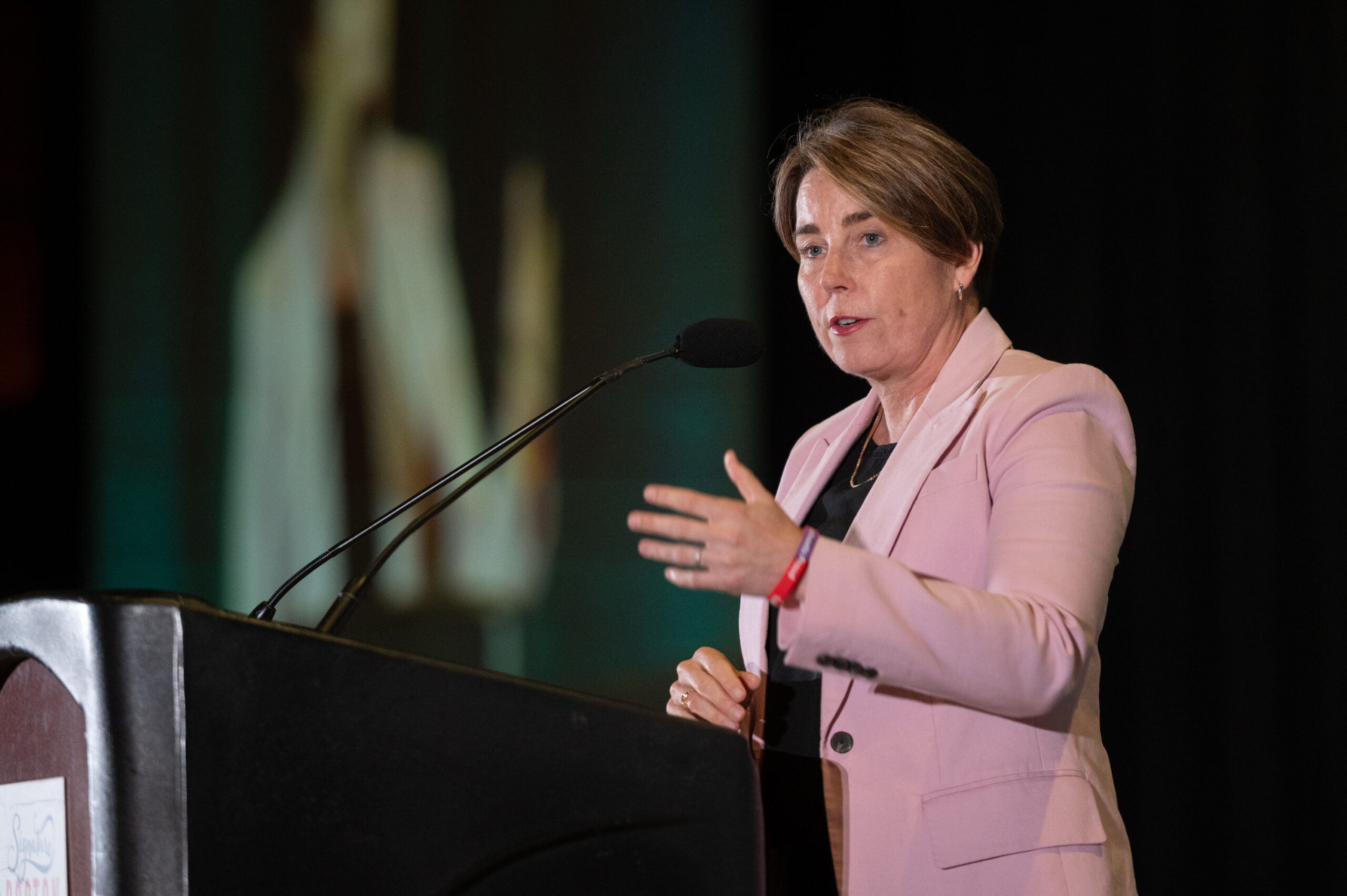
Governor Healey has released her FY2027 (FY27) budget proposal, known as House 2 (H2). The proposal totals $60.114 billion in line-item spending excluding Fair Share surtax spending and the Medical Assistance Trust Fund, an increase of $2.015B (3.5%) over the FY26 General Appropriation Act (GAA).
Revenue & Budget
H2 is built on a $44.9B consensus tax revenue forecast (including $2.7B from the Fair Share surtax), with the remaining spending supported by other non tax revenue sources such as federal funds and other dedicated revenues.
A side-by-side overview of key housing line items, including FY26 GAA amounts, the Governor’s FY27 H2 proposal, and CHAPA’s funding asks, is available in CHAPA’s FY2027 Budget Tracker. The tracker will be updated as the budget moves through the House and Senate.
Affordable Housing Priorities
CHAPA is encouraged that, even in a tight fiscal environment, the Governor’s proposal continues to direct significant resources toward housing stability. The Administration highlights $1.2 billion in targeted investments at the Executive Office of Housing and Livable Communities (EOHLC).
Here are the funding levels for some of the key rental assistance and housing stability programs in the budget:
- MRVP (Massachusetts Rental Voucher Program) (7004-9024)
- FY26 GAA: $253,311,840
- FY27 H2: $278,341,728
- The Administration says this level is expected to support 11,500+ vouchers, including 340+ project-based vouchers.
- AHVP (Alternative Housing Voucher Program) (7004-9030)
- FY26 GAA: $19,461,214
- FY27 H2: $19,263,183
- The appropriation provide rental assistance through 890+ vouchers for persons with disabilities.
- Updated Budget language: Outside Section 72 updates the AHVP statute to better align with MRVP, confirms AHVP can be issued as mobile or project-based vouchers, and places AHVP under EOHLC’s voucher-program authority by regulation rather than in the public housing statute framework.
- RAFT (Residential Assistance for Families in Transition) (7004-9316)
- FY26 GAA: $207,477,715
- FY27 H2: $201,205,991
- A crucial short-term eviction-prevention program and homelessness prevention program serving about 47,000 households each year.
- HomeBASE (7004-0108)
- FY26 GAA: $57,322,001
- FY27 H2: $82,322,001
- A state housing stabilization program that helps families leave Emergency Assistance shelter and stay housed by providing temporary financial help (up to $30,000 over two years) and case management support.
Homelessness, Shelter, and Housing Stabilization
H2 recommends $150M for programs supporting individuals experiencing homelessness (a 9% increase above FY26 GAA).
Key shelter and stabilization items include:
- Winter Beds (7004-0111): $12M to support 800 additional shelter beds.
- Homeless Individual Shelters (7004-0102): $114M to enable 2,800 shelter beds, plus day programming capacity (about 600 people), outreach, meals, and other supports.
- EA (Emergency Assistance Family Shelter and Services) (7004-0101): $259M, a 6% decrease below FY26 GAA, alongside $5M for security and accessibility grants (including upgrades like cameras, door alarms, and lighting improvements).
- Family Shelter Diversion (7004-0110): $7.5M, described as a distinct diversion program using flexible financial assistance to help divert families from shelter.
Public Housing
For state public housing, the H2 proposal includes two main line items:
- Public Housing Operating (7004-9005)
- FY26 GAA: $115,600,000
- FY27 H2: $117,810,000
- Public Housing Reform (7004-9007)
- FY26 GAA: $1,250,000
- FY27 H2: $1,269,215
What’s next
The Governor’s proposal is the first step in a long budget process that now moves to the Legislature. While H2 maintains important housing investments, more must be done to meet the scale of housing need, especially as costs continue to rise and far too many Massachusetts residents struggle to find a home they can afford.
Over the coming months, CHAPA will be working with members and partners to advocate for the funding needed to address housing challenges across the Commonwealth. For a more detailed discussion of the Governor’s FY27 H2 proposal and to plug into shared advocacy strategy, please join the Building Blocks Coalition. The next Building Blocks Coalition meeting will be March 25th and you can register for the meeting here.