by Matt Noyes | Apr 28, 2025 | Housing News
Massachusetts needs 222,000 new homes by 2035 and we need every tool available to reach that goal. Unfortunately, there are several proposed amendments to the FY2026 House budget that would hold us back if adopted.
Please call your state representative and urge them to oppose these amendments when they are considered by the House this week:
#311 – Eliminates State Enforcement of MBTA Communities Act by removing the authority of the Attorney General to enforce the MBTA Communities Act. This change would have profound implications not only for the future of this law, but for the Constitutional authority of the Office of the Attorney General.
#572 – Allows Towns to Claim Compliance Without Meeting Requirements and demonstrates a fundamental misunderstanding of the MBTA Communities Act. The law is not about what is on the land now – it is about what will be allowed to be built in the future. To produce homes that people, our communities, and the Commonwealth need, local zoning needs to allow for it.
#585 – Exempts Municipalities by Narrowing “MBTA Community” Definition, significantly limiting the number of new homes that could be permitted through the law and ignores the good-faith efforts made by nearly four dozen adjacent communities and small towns to comply with the MBTA Communities Act.
#606 – Limits The Use of Grant Funding to Encourage Compliance, letting communities that choose not to do their part to address the Commonwealth’s housing challenges off the hook from the consequences established by the law.
#1196 – Repeals Chapter 40B, the Commonwealth’s most effective tool to create affordable housing. Over the past 50 years, Chapter 40B has been responsible for creating nearly 70,000 homes across the Commonwealth. Losing this tool would make it exceedingly difficult to build homes that low and moderate income households can afford.
#1643 – Calls for the SJC to determine if Chapter 40B is constitutional, which ignores the history of previous rulings on the law. The SJC has heard many cases related to Chapter 40B and has consistently chosen not to determine the statute to be unconstitutional.
by Matt Noyes | Apr 16, 2025 | Housing News
Just after noon today, the House Ways and Means released its budget for Fiscal Year 2026. With state revenues coming in lower than hoped and a great deal of uncertainty at the federal level, legislators are faced with significant challenges in developing a spending plan for the state.
The housing items in the House Ways and Means proposal reflects these challenges. While there were modest increases for some housing programs (MRVP, RAFT, Sponsor-Based Supportive Housing, and Access to Counsel were all funded at a higher level than in the Governor’s budget), others were level funded (AHVP and Unaccompanied Homeless Youth), and several other important programs were significantly cut (Housing Consumer Education Centers and Public Housing Reform).
Legislators have until Friday afternoon to file amendments to the Committee’s budget proposal, with the full House slated to debate the FY2026 budget starting the week of April 28.
A tracking grid of CHAPA’s budget priorities is available here.
by Jenna Connolly | Jan 22, 2025 | Featured News, Housing News
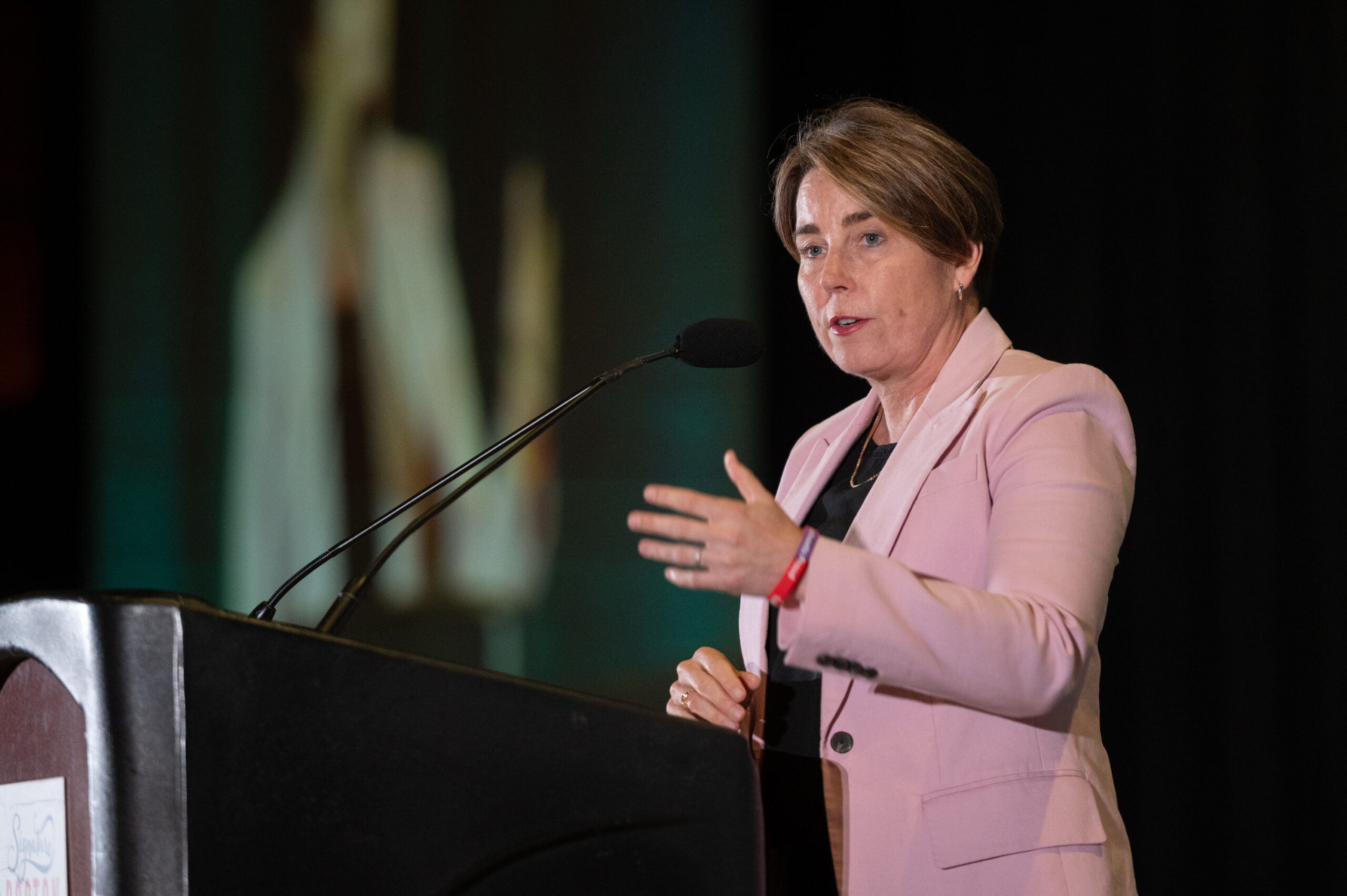
Today, Governor Healey unveiled her budget proposal for Fiscal Year 2026. CHAPA is pleased that during what is shaping up to be a challenging fiscal year, this legislation largely maintains the Commonwealth’s commitment to investing in housing, with increases put forward for several important programs.
An overview of the Governor’s H1 budget proposal compared to the final FY26 budget is available here.
Still, more must be done. While the FY26 proposal includes a higher funding level than FY25, costs continue to rise. Far too many Massachusetts residents are struggling to find a home they can afford. Failure to provide adequate resources to address actual housing needs will only result in hardship for impacted households and increased costs in other areas for the Commonwealth.
Over the next six months, CHAPA will be joining with our members and partners to advocate for the funding we need to help address our housing challenges. The Governor’s proposal is the first step in a long budget process that now moves to the Legislature.
For a more detailed discussion of the Governor’s budget proposal as well as an opportunity to provide input into advocacy strategy, please join us on Thursday, January 25 at 10:30am on Zoom for the Building Blocks Coalition meeting. Registration is required and is available on the CHAPA website.
by iwd Tina | Jul 19, 2024 | Housing News
Following the FY 25 Budget Conference Committee reaching agreement on funding for the upcoming fiscal year, the House and Senate were poised on Friday to send a final budget to Governor Healey. This would mark the first time in several years that the Legislature has passed an on-time budget. The FY 25 Budget was largely positive for housing, including funding increases across many accounts.
Where there were differences between the House and Senate on housing programs, the Conference Committee mostly approved the higher funding levels. Perhaps the most significant victory in the final bill is the inclusion of the long-sought Access To Counsel program (0321-1800) with funding of $2.5 million for FY 25.
Additional housing items that were considered by the Conference Committee were:
- Housing Consumer Education Centers (7004-3036), which received the higher Senate allocation of $10.5 million;
- Foreclosure and Housing Counseling (7006-0011), which received higher funding than proposed by either branch at $3.05 million; and
- Public Housing Operations (7004-0095), which split the difference between the House and the Senate proposals at $113 million.
Thanks to chairs Michlewitz and Rodrigues, as well as their staffs, for their tireless work on the FY 25 budget. Massachusetts is fortunate that the Legislature again has demonstrated its commitment to addressing the housing needs facing the Commonwealth through the prioritization of these and other housing accounts.